


Has a GP or another health professional told you you have radiculopathy?
Let's break down what that ACTUALLY means.
If someone has mentioned the word ‘radiculopathy’ to you and you’ve nodded along while zoning out as it was followed by some more big words that don’t really make much sense - don’t worry - you’re in good company! It’s a clinical term that sounds way scarier than it needs to be, so I’m here to break it down properly, in plain English.
The Simple Explanation
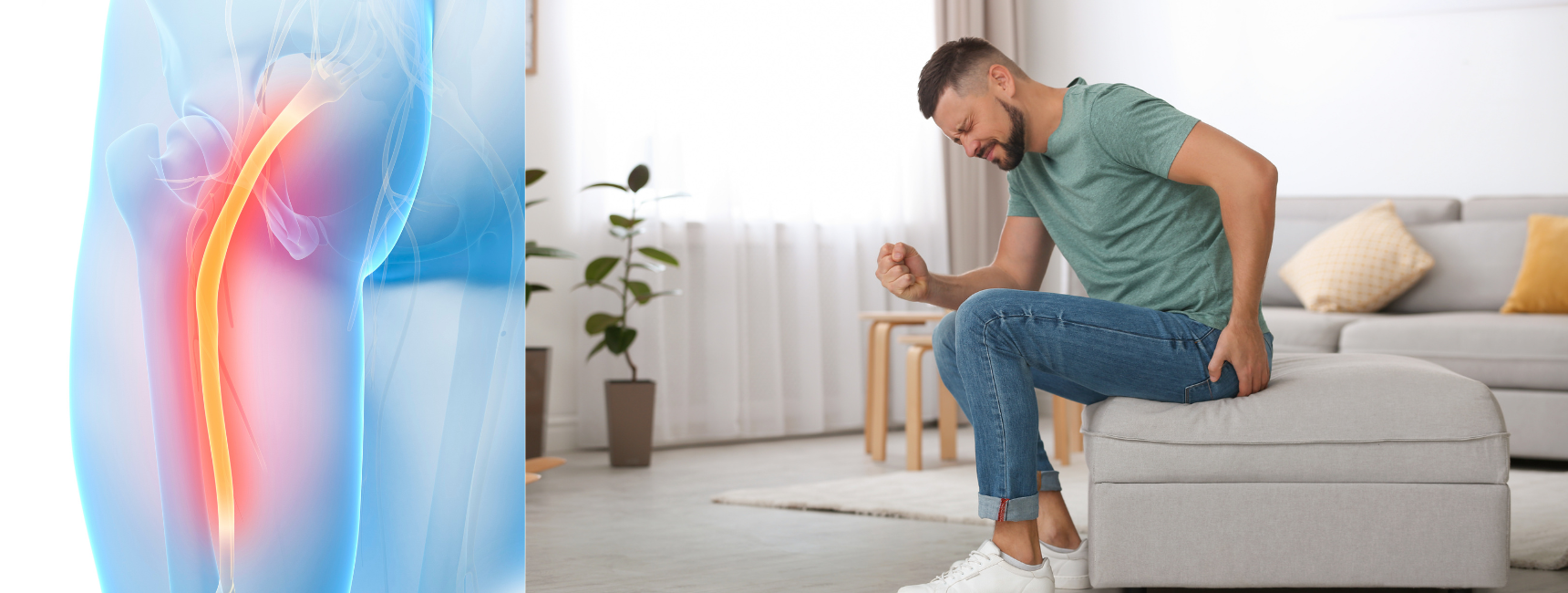
Radiculopathy just means a nerve root - where a nerve exits your spine - is being irritated, compressed, or pinched. That's it. "Radicul-" refers to the nerve root, and "-opathy" just means something's not working right with it. You've probably heard it called other things too - a "pinched nerve," "sciatica" (which is actually a type of radiculopathy affecting the sciatic nerve), or "a trapped nerve." Same general idea, but different names.
Why Does It Happen?
Your spinal cord runs down through your spine, and at each level, nerves branch off and exit through small gaps between the vertebrae. Those nerves then travel out to your arms, hands, legs, or feet, carrying signals both ways - sensation coming in, and movement commands going out.
Radiculopathy happens when something narrows the space that the nerves are trying to pass through, or presses directly on it. Common causes we see regularly include:
- Disc bulges or herniations — the cushioning disc between vertebrae pushes out and presses on the nearby nerve
- Degenerative changes — general wear and tear over the years, which can narrow the space through which nerves pass through
- Bone spurs — small bony growths that can develop with age or repetitive stress
- Acute injury — from heavy lifting, an awkward twist, or trauma
With our Midland patients, we see a lot of lower back and neck-related radiculopathy from years of physical labour - repetitive lifting, twisting, and loading through the spine - as well as from long periods sitting with poor posture in desk-based roles. Both extremes, oddly enough, can lead to the same issue.
How do you know if it’s Radiculopathy?
Because a nerve root doesn't just control one small area - it supplies a whole pathway down the limb - the symptoms tend to travel, rather than staying put where the actual problem is. Common signs include:
- Pain that radiates down an arm or leg, rather than staying localised
- Numbness or tingling following a specific pathway (not just a vague achy feeling)
- Muscle weakness in a particular movement or muscle group
- Symptoms that often get worse with certain positions - like prolonged sitting, bending forward, or coughing and sneezing (which increases pressure around the spine)
This is different from general muscular back or neck pain, which tends to stay more localised and doesn't usually follow that classic "travelling" pattern down a limb.
If you want to know if you have radiculopathy, book an assessment, and we can track the pattern of the nerve and do some orthopaedic assessment (another fancy word that just means see where giving you grief/ causing pain) to work out the underlying cause of the issue and give you personalised treatment and management advice.
Is it serious?
Most cases of radiculopathy are very manageable with conservative, non-surgical care, and many people improve significantly within weeks. It's not usually something to panic about.
That said, there are a few red flags that need urgent medical attention rather than conservative care:
- Loss of bladder or bowel control
- Progressive, significant weakness in a limb
- Numbness in the saddle area (inner thighs/groin)
- Symptoms following major trauma
These are uncommon, but if any of them apply to you, that's an emergency department visit, not a wait-and-see approach.
How do we approach it?
Once we've ruled out anything requiring urgent referral, management usually involves a combination of:
- Assessment to identify the level and nerve root involved — this guides everything else
- Manual therapy and mobilisation to reduce mechanical pressure and improve movement at the affected spinal level
- Targeted exercises to build stability and take pressure off the irritated nerve root
- Activity and ergonomic modification — because if the same repetitive loading or posture caused it, we need to address that too, not just treat the symptom
- Monitoring progress, and referring on for imaging or specialist review if things aren't progressing as expected
The evidence generally supports a trial of conservative management first for most cases of radiculopathy, with medical management or surgery reserved for cases that don't respond, or where red flag symptoms are present. No matter what, we can help manage or refer you as needed.
The Takeaway
Radiculopathy sounds like a mouthful, but it really just means a nerve root is unhappy and letting you know - usually through pain, numbness, or weakness that travels down an arm or leg. Most cases respond well to proper assessment and conservative care. If you've got symptoms like this and haven't had it checked out, don't just push through it - the earlier it's assessed, the more treatment and management options we usually have.
This blog is general information and isn't a substitute for individual assessment. If you're experiencing radiating pain, numbness, or weakness, come see us for a proper assessment. If you are experiencing any of the red flags mentioned in this blog post, please attend the emergency department for further assessment and triage.


